What Is the Meaning and Significance of Moonstone?
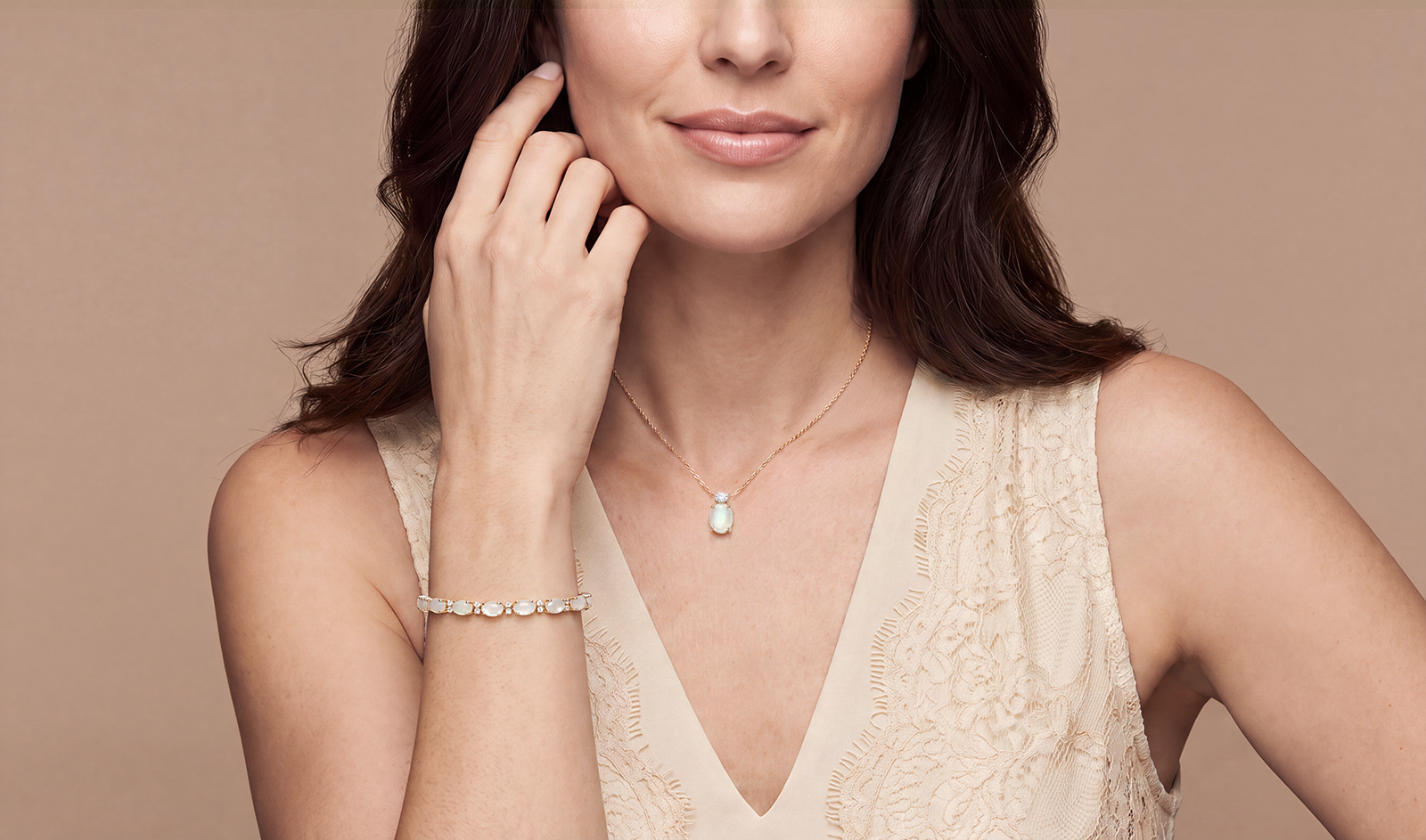
Moonstone is traditionally associated with the moon, love and good fortune, while modern interpretations also connect it with intuition and new beginnings. This feldspar gemstone is known for adularescence, a soft blue or white glow that appears to move beneath its surface. Moonstone is also one of June’s three birthstones.
Its name makes sense the moment you move the stone through light. That floating sheen can look almost like moonlight drifting across water, a visual effect that has shaped moonstone meaning and significance for centuries.
Ancient cultures connected moonstone with lunar deities; Art Nouveau jewelers later embraced its ethereal glow and modern crystal traditions have given it new symbolic meanings. Behind all that history, though, is a very real optical phenomenon, which is part of what makes moonstone so intriguing.
What Is Moonstone?
Moonstone is a feldspar gemstone whose signature glow, called adularescence, comes from the way light moves through microscopic layers inside the stone. As light scatters between these layers, a soft blue or white sheen appears to float beneath the surface and shift as the gemstone moves.
That glow is what separates a memorable moonstone from an ordinary one. The most prized examples have a nearly colorless, transparent to semitransparent body with a strong blue sheen that appears centered on the stone. Moonstone also occurs in white, gray, peach, green and brown tones, each giving the adularescence a different look.
Cut matters too. Jewelers most often shape moonstone into a smooth, domed cabochon because the curved surface shows the moving sheen particularly well. A poorly positioned cut can push the glow toward the edge or make it visible only from certain angles.
Moonstone is also one of June’s three birthstones, alongside pearl and alexandrite.
What Does Moonstone Symbolize?
Moonstone traditionally symbolizes good luck, good fortune, love and the moon, while modern interpretations also connect it with intuition and new beginnings. Its symbolism is closely tied to its moonlike glow and the stories different cultures built around it.
In Greek and Roman traditions, moonstone was associated with lunar deities, while Hindu mythology described it as solidified moonbeams. Over time, the gemstone also became linked with love, fertility, protection, luck and good fortune.
Today, moonstone meaning has expanded to include change, emotional balance and fresh starts, particularly in modern crystal traditions. Some people choose moonstone jewelry to mark a new chapter or carry a meaning that feels personal to them.
These associations come from history, culture and spiritual traditions rather than gemological science. They add meaning to the gemstone, but they are not scientifically proven properties.
What Is the Significance of Moonstone in Jewelry?
Moonstone holds significance in jewelry because it brings together centuries of symbolism, June birthstone meaning and its distinctive shifting glow. Unlike gemstones valued mainly for brilliance, moonstone changes character as it moves, with adularescence creating a blue or white sheen that seems to float beneath the surface.
Its place in jewelry history is just as distinctive. During the Art Nouveau period, designers such as René Lalique and Louis Comfort Tiffany used moonstone in pieces inspired by nature, fluid lines and unconventional materials. Arts and Crafts jewelers also favored it, often setting the gem in handcrafted silver.
Today, moonstone jewelry meaning is often personal. A moonstone birthstone necklace can celebrate a June birthday, a ring can mark a new beginning and a piece given to a partner can draw on the gemstone’s long associations with love, luck and good fortune.
And symbolism is only part of its appeal. For many people, that shifting, moonlike glow is what makes moonstone jewelry feel unlike anything else in the jewelry box.
What Does Moonstone Mean in Crystal Traditions?
In modern crystal traditions, moonstone is known to commonly represent intuition, emotional balance, feminine energy and new beginnings. Some practices also associate it with meditation, lunar cycles and the crown or third-eye chakras.
These ideas belong to spiritual and metaphysical traditions rather than gemology. People may wear moonstone jewelry as a personal reminder of change, reflection or a fresh start, but science has not established that moonstone can alter emotions, health or energy.
These associations are rooted in cultural and astrological traditions. There is no scientific evidence that gemstones produce measurable physical or psychological effects.
That distinction lets both sides of moonstone significance coexist. Its mineral properties explain the glow. Culture, history and personal belief explain what people have chosen to see in it.
What Types of Moonstone Should You Know?
Moonstone comes in several body colors, including colorless, white, gray, green, peach and brown. You may also see rainbow moonstone in jewelry, although it is technically a variety of labradorite rather than traditional moonstone.
| Moonstone Type | What It Looks Like | What to Know |
|---|---|---|
| Colorless or white moonstone | Nearly colorless to milky with blue, silver or white sheen | The most prized examples are nearly colorless with strong, centered blue adularescence |
| Peach moonstone | Peach to orange-yellow body color with a softer glow | A popular moonstone color variety with a warmer appearance |
| Gray moonstone | Gray to nearly black bodycolor with lighter sheen | The darker body color creates stronger contrast with the adularescence |
| Green moonstone | Green body color with visible adularescence | A recognized natural moonstone color, including bright green material found in southern India |
| Rainbow moonstone | Transparent to translucent with flashes of blue and other colors | Technically labradorite, but widely sold under the trade name rainbow moonstone |
When comparing types of moonstone, look beyond body color. GIA identifies the color, strength and position of the adularescence, along with clarity, as important quality factors. Fine moonstone typically has a nearly colorless, transparent to semitransparent body with a strong blue sheen centered on the stone and visible from several angles.
How Do You Choose the Right Moonstone Jewelry?
Choose moonstone jewelry by checking the stone’s adularescence, cut and overall quality first, then consider the jewelry type and setting that suit how you plan to wear it. A strong, well-positioned glow should move across the stone as it catches the light rather than appearing only from one angle.
For higher-quality moonstone, look for a clean body with noticeable blue or white sheen. A smooth cabochon cut is especially popular because its rounded surface helps display adularescence across the gemstone.
Next, think about where you will wear it. Moonstone necklaces, pendants and earrings generally face fewer knocks, making them easy choices for regular wear. Moonstone rings and bracelets sit in higher-contact areas, so protective settings and a little extra care can help shield the stone from impact.
The setting can make a difference too. Bezels and designs with more metal around the gemstone offer added protection, while open settings put more of moonstone’s glow on display.
At Angara, you can explore moonstone jewelry across rings, earrings, necklaces, pendants and bracelets, then personalize select designs by gemstone quality, carat weight and metal. Start with the glow you love, then choose the design that works for the way you actually wear your jewelry.
- Classic Solitaire Oval Moonstone and Diamond Collar Ring$1,889 $2,099


- Round Moonstone Halo Stud Earrings$2,276 $2,529

- Round Moonstone Solitaire Infinity Knot Pendant$2,015 $2,239


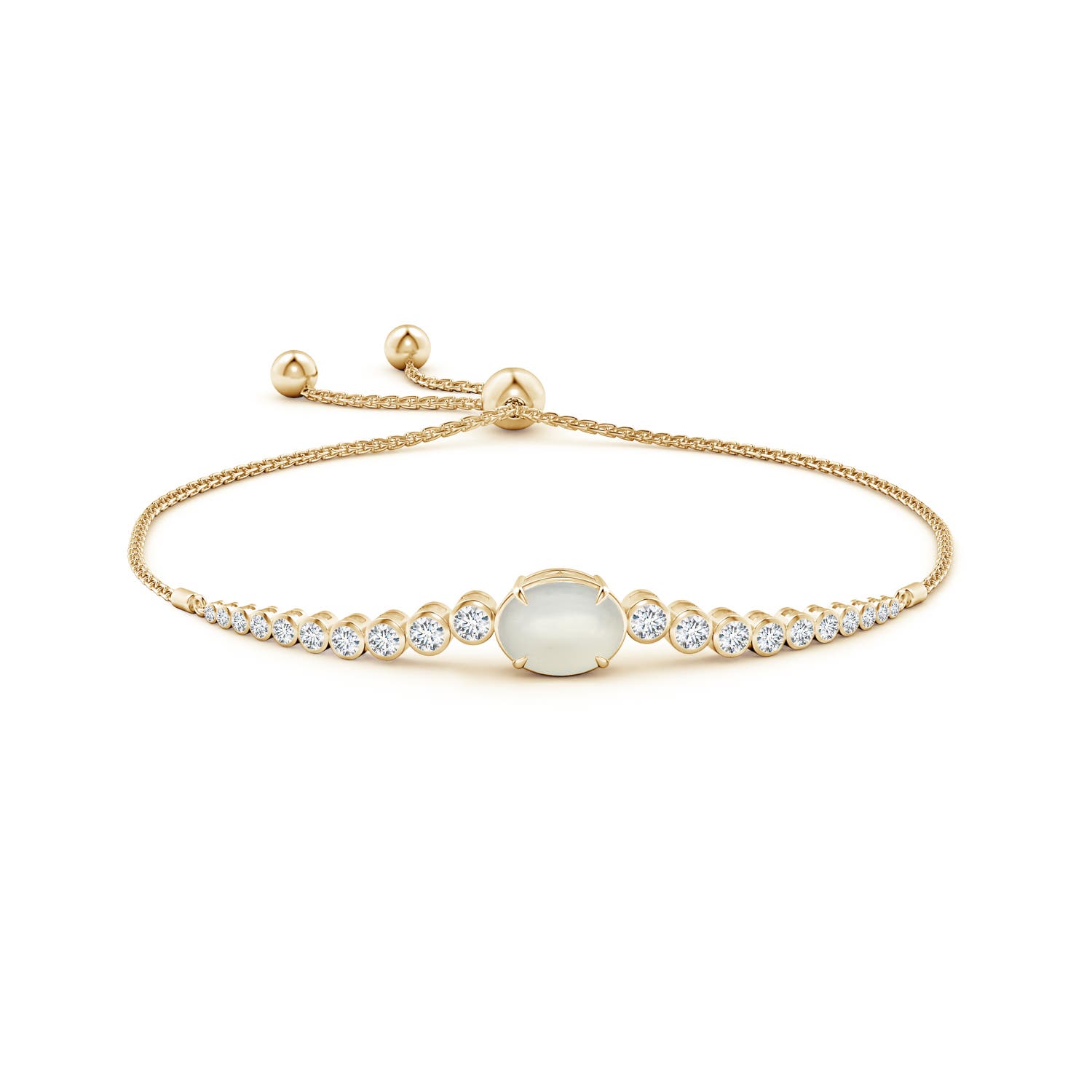
- Oval Moonstone Bolo Bracelet with Bezel Diamonds$4,058 $4,509


- Oval Moonstone Bypass Ring with Trio Diamond Accents$2,258 $2,509


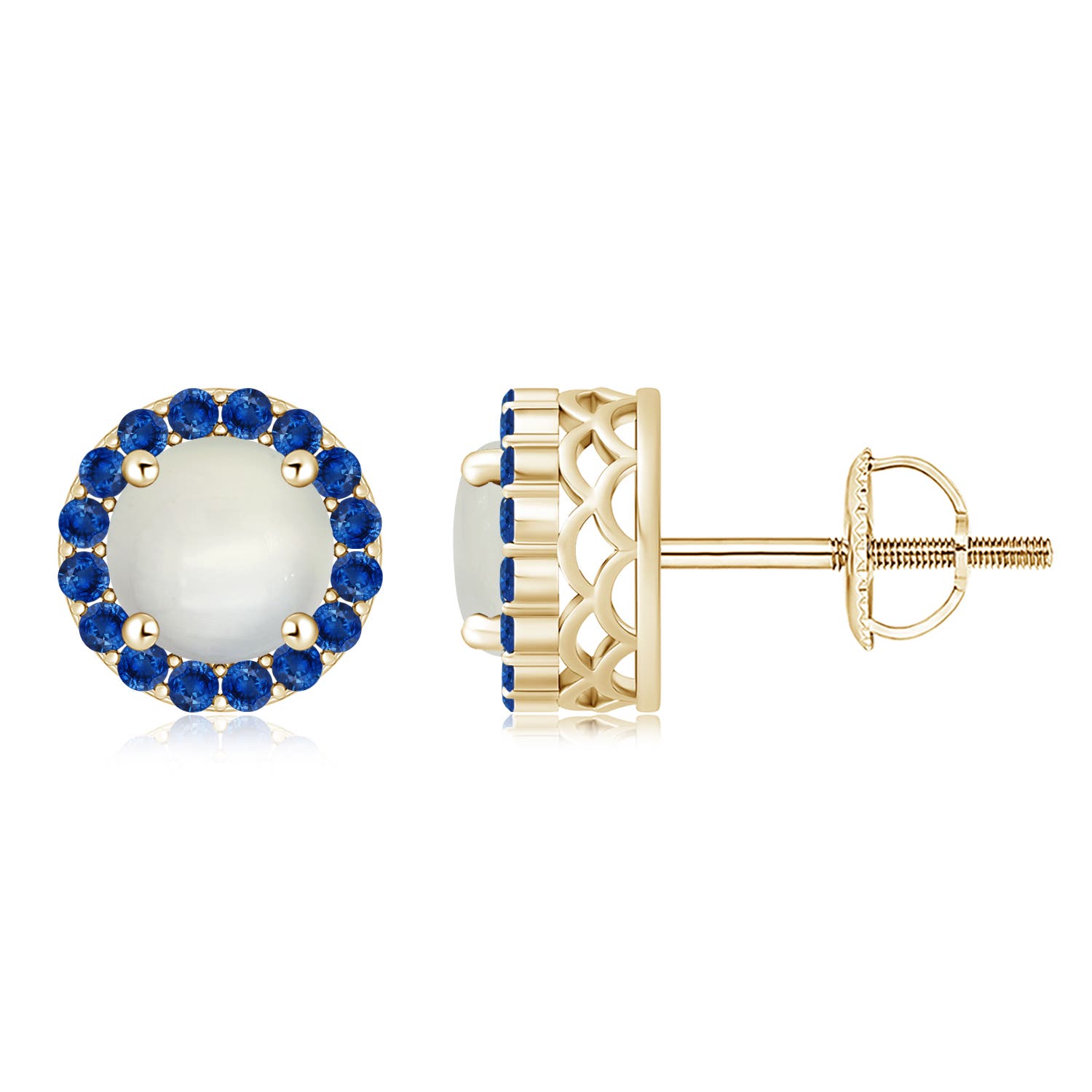
- Round Moonstone and Sapphire Halo Stud Earrings$2,348 $2,609

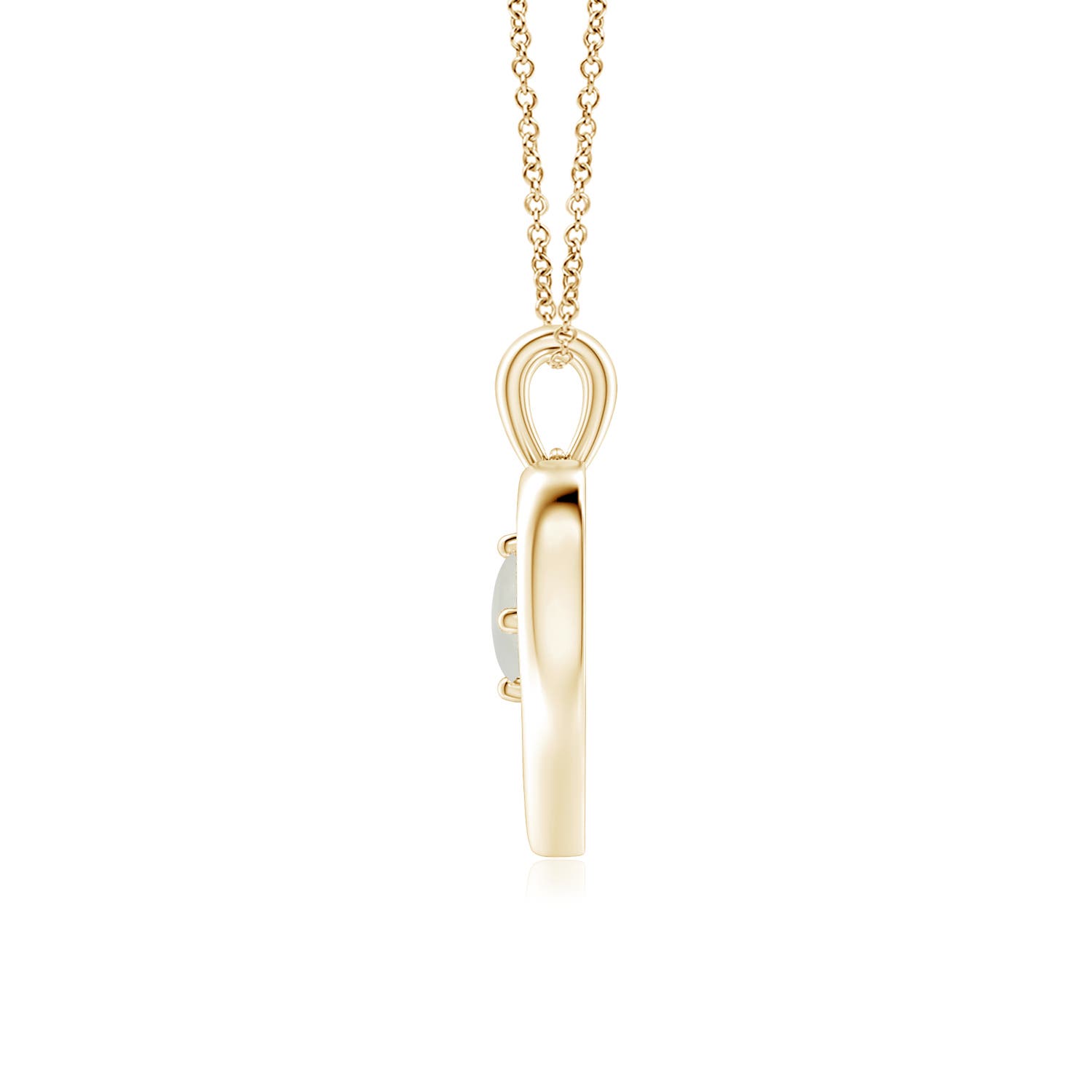
- Solitaire Round Moonstone Open Heart Pendant$1,331 $1,479


- Classic Oval Moonstone Tennis Link Bracelet$2,618 $2,909








How Do You Wear Moonstone Jewelry?
Moonstone jewelry is easiest to wear where light and movement can bring out its signature glow. Necklaces, earrings, rings and bracelets all show the stone differently, so the best choice depends on your style and how often you plan to wear it.
Moonstone necklaces and pendants keep the gem close to the neckline, where its blue-white sheen can shift naturally as you move. Wear one alone for a clean focal point or layer it with simple chains that will not compete with the stone.
Moonstone earrings make the most of movement. Drop styles allow the adularescence to change with every turn, while studs keep the effect more understated and easy to wear.
Moonstone rings put the gemstone front and center, but they need a little more consideration because moonstone is softer than sapphire or diamond. They work best when you can remove them before workouts, sports or other hands-on activities.
Metal changes the look too. White gold, platinum and sterling silver emphasize moonstone’s cooler blue and white tones, while yellow and rose gold add warmth and contrast.
There is no one right way to style moonstone jewelry. Let the gemstone’s shifting glow do most of the work, then choose the piece and metal that feel most like you.
Read Also: Best Metal for Moonstone Jewelry
What Does It Mean to Give Someone Moonstone?
Giving someone moonstone can symbolize love, good luck, good fortune and new beginnings, making it a meaningful gemstone gift for both celebrations and life changes. It is also one of June’s three birthstones, so moonstone jewelry has an especially personal connection for someone born that month.
As a June birthstone gift, a moonstone ring, necklace or pair of earrings can turn a birthday into something more personal than simply choosing a piece they like. Its historical associations with love and luck also give moonstone meaning when gifted to a partner or someone marking an important relationship milestone.
Moonstone can feel equally relevant at the start of something new. Modern crystal traditions associate it with change and new beginnings, which is why it is often chosen for graduations, a new job, a move or another fresh chapter. These meanings are symbolic rather than scientifically proven, but they can still make the gift feel thoughtfully chosen.
And there is one meaning that needs no tradition attached to it. If the person you are buying for loves moonstone’s shifting blue-white glow, that alone can make moonstone jewelry feel distinctly theirs.
How Do You Care for Moonstone Jewelry?
Clean moonstone jewelry with warm water, mild soap and a soft cloth or brush, and protect it from hard knocks, high heat and sudden temperature changes. Avoid ultrasonic and steam cleaners, which GIA does not recommend for moonstone.
Moonstone ranks 6 to 6.5 on the Mohs hardness scale and has two directions of cleavage. That means a sharp impact can do more than scratch the surface. It can chip or even split the stone.
For everyday moonstone jewelry care:
- Clean gently. Use warm, soapy water and a soft cloth or brush, then rinse and dry thoroughly.
- Skip steam and ultrasonic cleaners. Heat and vibration can put unnecessary stress on the stone.
- Remove moonstone rings before workouts or hands-on tasks. Rings take more knocks than earrings or pendants.
- Avoid sudden temperature changes. Rapid heating or cooling can increase the risk of damage.
- Store moonstone separately. Harder gemstones such as diamond, sapphire and ruby can scratch it if pieces rub together.
Moonstone can absolutely be worn and enjoyed regularly. It simply needs a little more care than harder gemstones. For more everyday cleaning and storage tips, see our Moonstone Jewelry Care and Cleaning Guide.
Moonstone has carried meaning for centuries, from love and good fortune to intuition and new beginnings. Its shifting glow gives those associations a visual quality that feels especially fitting, almost as though the stone changes with the light and the moment.
If that mix of symbolism, history and soft lunar glow speaks to you, explore Angara’s moonstone jewelry and find a piece that feels personal.
FAQs
1. What is the main significance of moonstone?
Moonstone significance centers on its connection with the moon, love and luck, with modern traditions also linking it to intuition and new beginnings. Its moving glow, called adularescence, has helped shape these lunar associations for centuries.
2. What does moonstone symbolize spiritually?
Moonstone's spiritual meaning commonly includes intuition, emotional balance and new beginnings in modern crystal traditions. These are symbolic or metaphysical associations rather than scientifically proven effects.
3. Is moonstone a June birthstone?
Yes, moonstone is a June birthstone alongside pearl and alexandrite. Its birthstone status makes moonstone jewelry particularly meaningful for June birthdays.
4. What does moonstone symbolize in love?
Moonstone has traditionally been associated with love, passion and fertility. Today, moonstone jewelry may carry those historical meanings when given as a romantic or relationship gift.
5. Is rainbow moonstone actually moonstone?
Rainbow moonstone is technically transparent labradorite rather than traditional moonstone. It belongs to the same feldspar family and the jewelry trade widely accepts the name because of its strong multicolored sheen.
6. Can you wear moonstone jewelry every day?
Yes, you can wear moonstone jewelry regularly, but moonstone needs more care than harder gemstones. It ranks 6 to 6.5 on the Mohs scale and can chip or cleave after a hard knock, so rings require particular attention.
You may also like

Ring Size Chart: How to Find Your Perfect Fit at Home
20 Mar, 2024
Gems Price Chart Ranked by Value
18 Nov, 2023
How to Test Gold at Home
5 Jan, 2023
Ruby vs Garnet: What’s the Difference?
13 Dec, 2018
Everything You Need to Know About Blue Gemstones
1 Dec, 2023
Best Crystals for Protection: Meaning & How to Use
16 Dec, 2022
How to Tell if a Gemstone Is Real
20 Dec, 2022
Colored Gemstone Size Chart: MM, Carat & Dimensions
14 Aug, 2024
11 Ways to Keep Your Ring From Spinning
19 Jan, 2024



Shop Our Bestsellers
- Prong-Set Lab-Grown Emerald Teardrop V-Bale Pendant with Diamond$2,099


- Solitaire Oval Opal Split Shank Ring with Trio Diamonds$1,619

- Lab-Grown Prong-Set Round Diamond Inside Out Hinged Clip Hoop Earrings$1,429
- V-Bale Pear-Shaped Garnet Solitaire Pendant$749

- Lab-Grown Princess Diana Inspired Blue Sapphire Engagement Ring with Lab Diamond Halo$4,869


- Lab-Grown Classic Round Diamond Tennis Bracelet$2,789


- Heart Lab-Grown Diamond Solitaire Pendant$1,459


- Prong-Set Emerald-Cut Lab-Grown Emerald Solitaire Pendant$1,639

- Lab-Grown Basket-Set Solitaire Diamond Stud Earrings$1,989


- Heart-Shaped Aquamarine Infinity Pendant with Diamond Accents$1,969





Featured In
What Customers Are Saying
Verified Reviews
The sparkle!!
Oct 08, 2026I love my ring so much! It is just like the picture and has so much sparkle and shine! I had to return the first ring because I didn't get my size right. The customer service was so helpful and made it easy to exchange. I'm so happy with it! Would definitely order again.
Kristan S.
Fabulous ring
Oct 08, 2026Elegant and stylish - the cut and color are beautiful. I love wearing it and get so many compliments.
Emily H.
So beautiful!!
Oct 08, 2026Super fast shipping. It’s so helpful to have the stone grades side by side. Love!!!!
Mary N.
Trustworthy Shop, Nice Art
Oct 08, 2026Ordered two necklaces. Delivery was promt. Pieces of good craftsmanship. Unfortunately not exactly what I was looking for. Pictures online (AI) differ slightly but noticeably from product.
Kilian R.
S/O loved it!
Oct 07, 2026She hasn’t taken this off since I gave it to her She says its easily her newest favorite piece of jewelry
Seth T.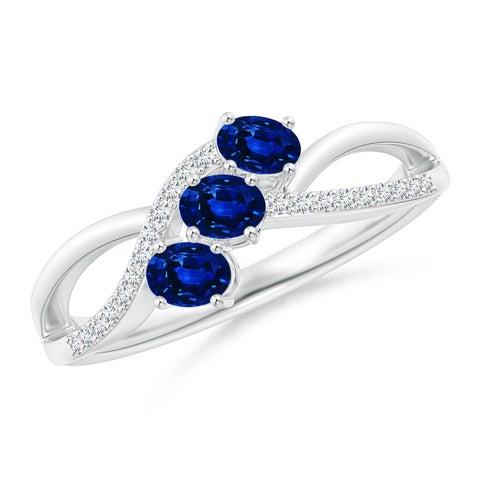
One very satisfied customer
Oct 07, 2026I bought a Sapphire Three Stone Bypass Ring for my wife to mark her 80th birthday.. She could not have been happier with her gift. he wears it on the middle finger of her left hand. It is eye-catching with understated elegance!. AJ
ALAN J.
Yes i love it
Oct 07, 2026It’s beautiful
Xander V.
51 year anniversary
Oct 07, 2026Great quality materials, design and workmanship.
Jolynn K.
Beautiful ring, excellent customer service
Oct 06, 2026The ring arrived far earlier than expected, a beautiful piece very well presented. Unfortunately I decided it was not the right ring for my partner but the customer service team went above and beyond to make everything right. I cannot recommend Angara highly enough and will definitely use them again!
Jonathan L.