


Lab Grown Alexandrite Bracelets
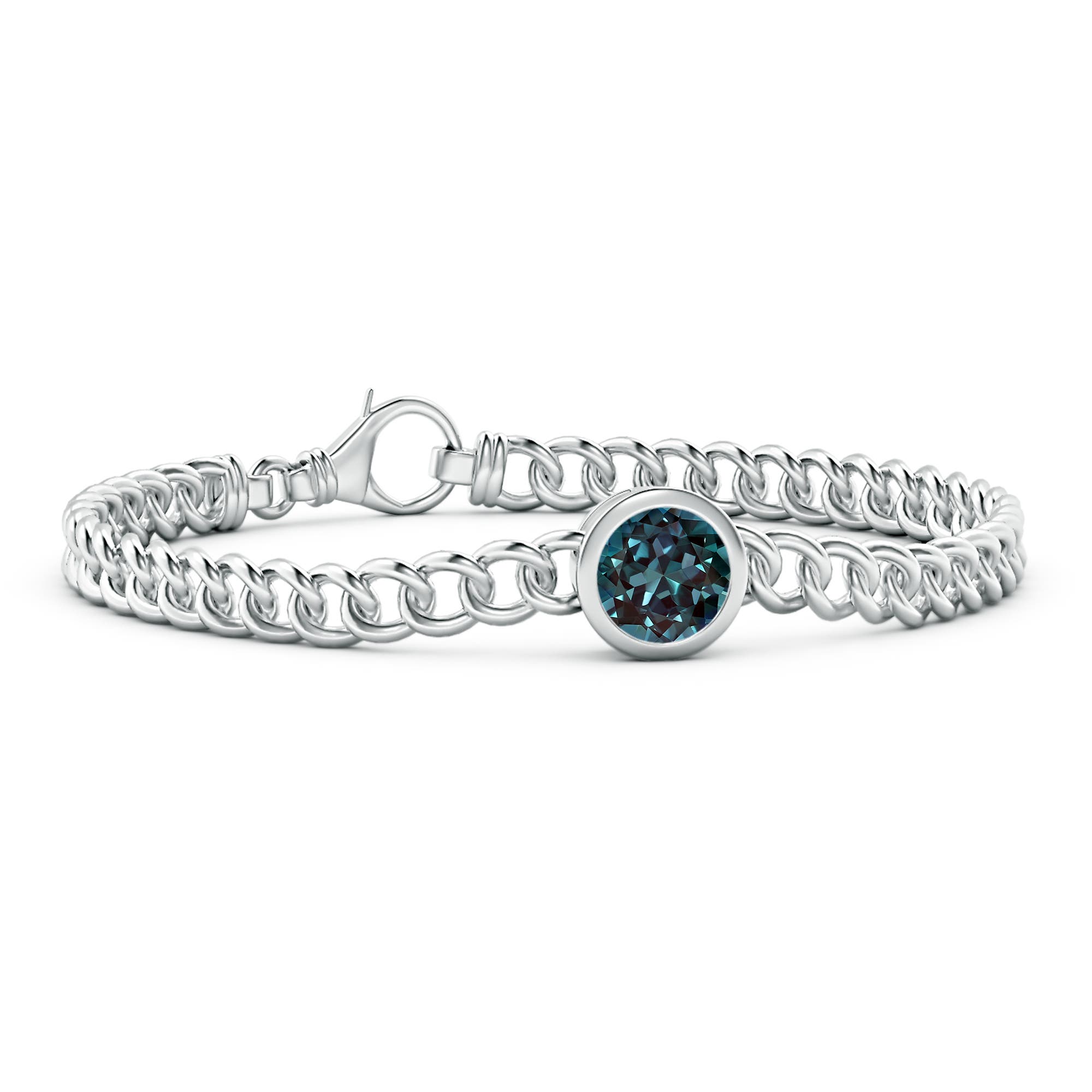
Angara's lab-grown alexandrite bracelets never look quite the same twice, shifting from greenish-blue to purplish-red as the light changes. Explore customizable tennis, bolo, chain and stackable styles among others and let our artisans handcraft your pick for you with carefully selected gems. Enjoy free shipping on your order. View Lab-Grown Bracelets






SHOP WITH CONFIDENCE
Free Extended Returns
Not quite right? Return it for a full refund. Holiday purchases qualify for extended returns.

Free Insured Shipping
Your jewelry arrives safely with free, fully insured shipping.

Easy Pay Installments
Enjoy your favorites now and pay later with easy, interest-free installments. No hidden charges.


What Is a Lab-Grown Alexandrite Bracelet?
A lab-grown alexandrite bracelet is a bracelet set with alexandrite created in a controlled laboratory environment with the same chrysoberyl composition and color-change phenomenon as natural alexandrite. Its origin is different, but the defining optical effect remains: greenish-blue tones in daylight can shift toward reddish-purple under warmer light.
That change is especially interesting on the wrist because a bracelet rarely stays at one angle. Every turn of your hand changes how the stones meet the light, so even a single alexandrite can look subtly different throughout the day. A tennis bracelet takes that idea further by repeating the effect across a full line of stones.
Angara's collection showcases striking lab-grown alexandrite bracelets, from one-stone chains and ribbon designs to bolos, stations, stackables, infinity links and full tennis bracelets. If you want a deeper introduction to the gemstone before choosing a style, continue to our Lab-Grown Alexandrite Jewelry Buying Guide.
Why Choose a Lab-Grown Alexandrite Bracelet?
Choose a lab-grown alexandrite bracelet if you want genuine alexandrite's color-changing character with more flexibility around size and price than its exceptionally rare natural counterpart. Lab-grown and natural alexandrite share the same composition, 8.5 Mohs hardness and characteristic color-change effect, but their origins differ.
That gives you more freedom in a bracelet, where multiple stones can quickly add up. You can keep the color concentrated in a single-stone chain or ribbon bracelet, spread it across five stones or choose a tennis design that carries alexandrite around the wrist.
Our assortment starts at $859, while diamond-accented, higher-carat and full tennis bracelets extend beyond $10,000. Rather than simply choosing the largest option, think about how much continuous color change you actually want to see.
For more help comparing setting, fit and scale, Angara's Lab-Grown Alexandrite Bracelet Buying Guide takes you through the details.
Which Lab-Grown Alexandrite Bracelet Style Should You Choose?
Choose your bracelet style by deciding whether you want one focal alexandrite, an adjustable design or a continuous line of color-changing stones.
A chain or ribbon bracelet keeps things lighter, starting at $859. A lab-grown alexandrite ribbon bracelet places one round stone within flowing metalwork and diamond accents, while our bezel-set chain bracelet gives you a more pared-back single-stone option.
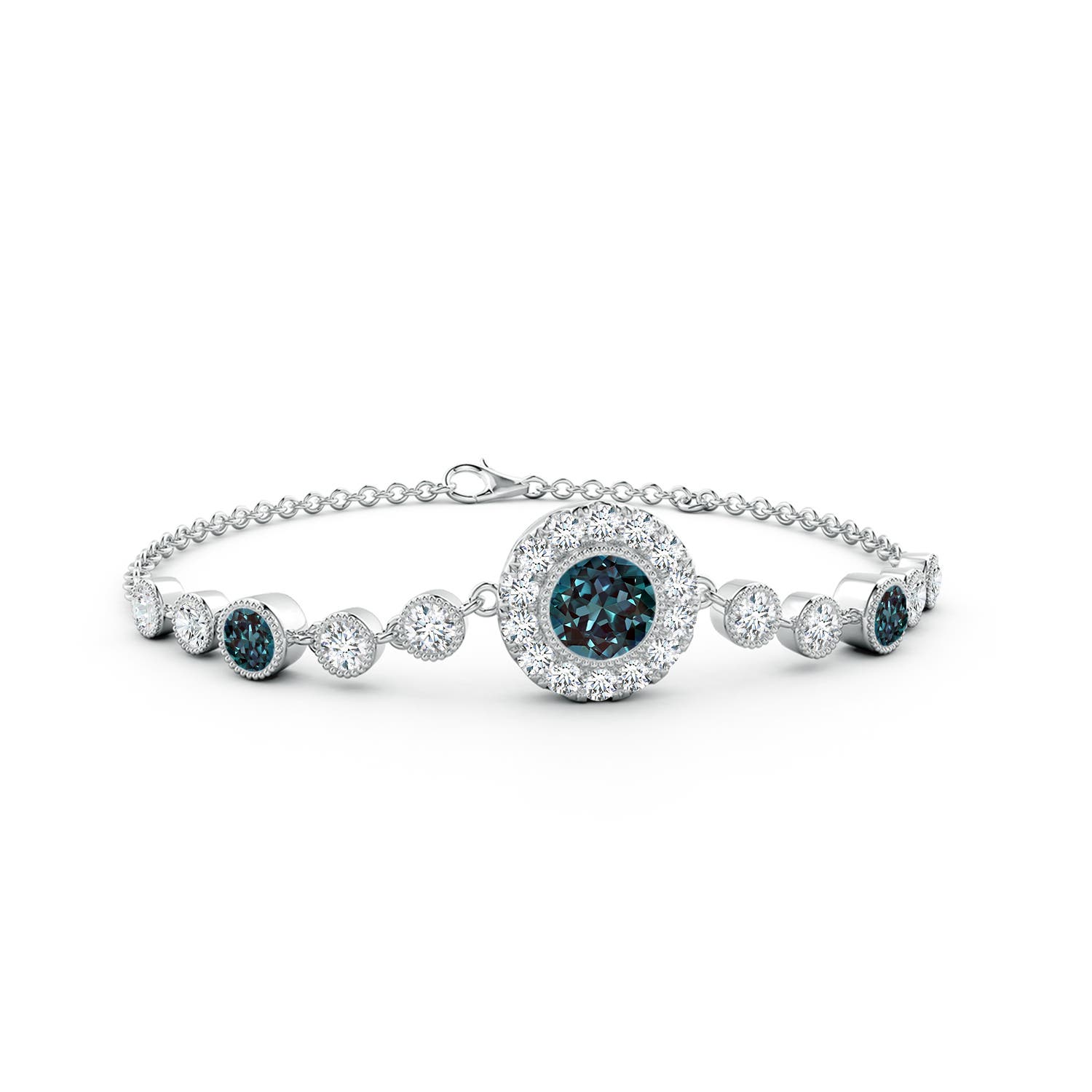
Bolo bracelets start at $1,359 and give you more control over fit. Angara's collection includes cushion, oval, east-west oval and halo designs, with diamonds appearing as pavé, bezel and alternating accents. The sliding closure also makes it easier to adjust where the bracelet sits on the wrist.
A lab-grown alexandrite tennis bracelet starts at around $7,600 and puts the gemstone front and center. Round and oval designs range from uninterrupted rows of alexandrite to combinations with diamonds, while station and stackable bracelets offer a middle ground if you want more than one stone without a full tennis line.
Infinity links, open circles, swirl designs and curb-chain bolos give women's lab-grown alexandrite bracelets a more directional option when a traditional tennis silhouette is not quite your style.
How Do You Choose a High-Quality Lab-Grown Alexandrite Bracelet?
To choose a high-quality lab-grown alexandrite bracelet, look first at the strength of the color change, then clarity, cut, gemstone dimensions and total carat weight. Alexandrite's signature feature is the shift from greenish-blue in daylight to reddish-purple under warmer light, and a clearer, more distinct transition is one of the most important qualities to consider.
Clarity matters because visible inclusions can interrupt both light return and the color-change effect. Lab-grown alexandrite typically gives you access to cleaner stones, while good cutting helps the gem show even color and brilliance rather than dark or lifeless areas.
Angara's lab-grown alexandrites are offered as Premium quality, rather than through the Good, Better, Best and Heirloom tiers used for many natural gemstones. Our product pages then let you compare carat weight and dimensions to understand the scale of the individual stones.
For a bracelet, stone matching matters too. In a tennis or multi-stone design, look at how evenly the stones relate in size and visual presence rather than evaluating one alexandrite in isolation.
Which Shapes and Metals Can You Choose for Lab-Grown Alexandrite Bracelets?
Angara's lab-grown alexandrite bracelets feature round, oval and cushion stones, with each shape changing how the color play sits across the wrist.
Round alexandrites give you an even, compact shape that works especially well in single-stone and linear tennis styles. Ovals stretch the color across a longer surface, which is why they appear frequently in tennis, station, stackable and bolo designs. Cushion cuts give the stone a broader face with softened corners and appear in more structured chain and bolo styles.
Metal changes what you notice in the gem. White gold and platinum keep the setting cool and can work particularly well with the greenish-blue side of alexandrite. Yellow gold introduces warmer contrast, while rose gold creates a softer frame around the reddish-purple tones.
Angara offers white, yellow and rose gold across many designs, with platinum available on select pieces.
If you are comparing color-changing stones with other lab-created gems, Angara's broader Lab-Grown Bracelets collection gives you an easy way to look across gemstone types.
How Should a Lab-Grown Alexandrite Bracelet Fit?
A lab-grown alexandrite bracelet should feel secure with enough room for comfortable movement but not so loose that it repeatedly hits hard surfaces.
Tennis and chain bracelets generally suit a slight drape. A bracelet that fits too tightly can feel restrictive, while one that travels excessively up and down the arm may be more likely to catch or knock.
Bolos solve that problem differently. Their sliding closure lets you control how closely the design sits, and Angara's bezel-set alexandrite bolo, for example, adjusts between 7 and 10 inches.
Also check the clasp rather than focusing only on length. Angara's collection includes lobster-claw clasps, bracelet catches and adjustable bolo closures, each giving the finished piece a different feel on the wrist.
Can You Wear a Lab-Grown Alexandrite Bracelet Every Day?
Yes, lab-grown alexandrite is durable enough for regular wear, although bracelets should still come off for rough or hands-on activities. Alexandrite ranks 8.5 on the Mohs scale, giving both natural and lab-grown stones strong resistance to scratching.
The bracelet itself is the reason to stay mindful. Your wrist naturally meets desks, counters and other surfaces more often than earrings or pendants do, so settings and clasps can still take a knock.
Wear yours through normal daily plans, but it is recommended that you remove it before exercise, gardening, swimming, cleaning or anything else that puts the bracelet in repeated contact with hard surfaces or chemicals.
If everyday wear is important to you, a bezel-set style surrounds more of the stone's edge, while a bolo can help you keep the bracelet closer to the wrist. For more information, explore our Alexandrite Jewelry Care Guide.
What Is the Difference Between Lab-Grown and Natural Alexandrite?
Lab-grown and natural alexandrite have the same chrysoberyl composition, color-change effect and 8.5 Mohs hardness, but they form in different environments. Natural alexandrite develops under rare geological conditions, while lab-grown alexandrite is created in controlled conditions designed to reproduce the same material.
That difference in origin affects rarity and price rather than turning one into an imitation of the other. Lab-grown alexandrite is real alexandrite, and the term "synthetic" in gemology refers to laboratory origin rather than fake material.
For bracelets, that distinction can be particularly useful. A style using 20 or more alexandrites would require a considerable amount of extremely rare natural material, while a lab-created alexandrite bracelet gives you much more freedom to explore multi-stone and higher-carat designs.
If you are deciding between the two, Angara's Natural vs. Lab-Grown Alexandrite Guide explains the differences in greater detail.
Is Lab-Grown Alexandrite a June Birthstone?
Yes, lab-grown alexandrite represents the same gemstone associated with June, making a bracelet a meaningful option for a June birthday. Alexandrite sits alongside pearl and moonstone among the gemstones connected with June.
The design does not have to look overtly like birthstone jewelry. A single-stone bracelet keeps the connection subtle, while a tennis, infinity or diamond-accented bolo gives the occasion more presence.
That flexibility also makes lab alexandrite bracelets useful for milestone gifting beyond birthdays. You can choose the gemstone because the color change means something to the wearer rather than because a calendar says you should.
For a broader look at the month, Angara's June Birthstone Guide compares alexandrite with pearl and moonstone.
How Can You Personalize a Lab-Grown Alexandrite Bracelet at Angara?
You can personalize most Angara lab-grown alexandrite bracelets by choosing the carat weight and metal offered with the design. The lab-grown alexandrite itself is offered in Premium quality, so the main decisions are how much gemstone presence you want and what metal you want around it.
Start with scale. A single-stone bracelet may offer different alexandrite sizes, while select tennis and link designs let you increase the total carat weight across multiple stones.
Then choose the metal. White gold keeps the overall look cooler, yellow gold creates warmer contrast and rose gold gives the color-changing stone a softer frame.
For this category, bigger does not automatically mean better. A lower-carat tennis or station bracelet can create far more color across the wrist than a larger single alexandrite simply because the stones extend across more of the design.
Once your choices are made, Angara's expert artisans handcraft the bracelet to order.
How Do You Clean and Care for a Lab-Grown Alexandrite Bracelet?
Clean a lab-grown alexandrite bracelet with lukewarm water, mild soap and a soft brush or cloth, then dry it thoroughly before storing it. Angara's gemologists recommend gentle cleaning and advise keeping the gemstone away from harsh chemicals, hard knocks and prolonged exposure to chlorinated water.
With bracelets, pay equal attention to the construction. Check links, prongs and clasps occasionally, and make sure an adjustable bolo continues to slide and hold securely.
Store your bracelet separately from harder gemstones such as diamonds to reduce scratching and remove it before exercise, cleaning or swimming.
Angara's Lab-Grown Alexandrite Jewelry Care Guide goes deeper into cleaning, storage and long-term maintenance.
Why Buy Lab-Grown Alexandrite Bracelets From Angara?
Angara offers lab-grown alexandrite bracelets across chain, ribbon, bolo, station, stackable, infinity and tennis styles, giving you several very different ways to wear the same color-changing gemstone.
The collection moves from an $859 ribbon bracelet to larger tennis and link designs priced above $10,000, with diamonds appearing across many styles for contrast. Most pieces let you personalize carat weight and metal rather than buying one fixed configuration.
Each bracelet is made to order and comes with a Certificate of Authenticity. Angara also offers free insured shipping and free returns in the US.
If alexandrite's color change has become the real draw, continue to Lab-Grown Alexandrite Jewelry to explore rings, earrings, pendants and necklaces featuring the same gemstone.