









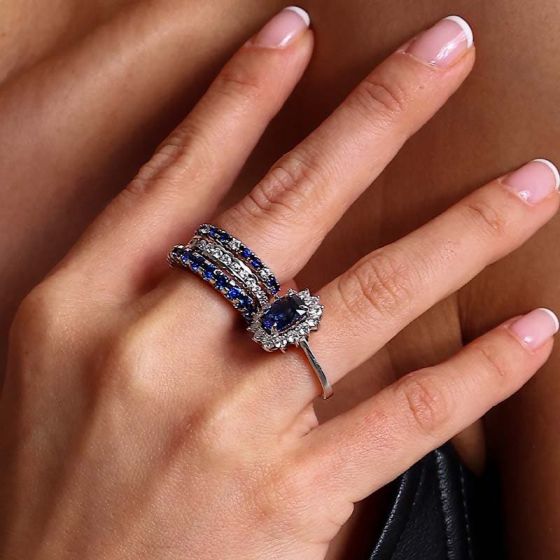



Did you know ruby and sapphire are cousins? They come from the same mineral family, which is corundum!

Ruby
- Corundum
- 9 Mohs
- Cancer Leo
- Love, Power, Passion
- July Birthstone
 Round
Heart
Emerald
Round
Heart
Emerald
 Round
Round Heart
Heart Emerald
Overview
The word ruby comes from the Latin ruber, which means red. In Sanskrit texts, the ruby is referred to as the ‘king of gems’. This magnificent gemstone is available in different hues of red – from pinkish to bluish red. Like sapphire, ruby is also a variety of corundum, one of the hardest minerals on the earth.
From the beginning of civilization, rubies were prized possessions of many kings and queens. In the middle ages, the royals and the aristocrats in Europe coveted rubies more than any other gemstone.

Properties
Rated 9 on the Mohs scale of mineral hardness

01Hardness & Strength
The red variety of the mineral corundum, rubies exude remarkable luster and sparkle. Corundum is mainly composed of aluminum and oxygen. It also contains traces of other elements such as iron, chromium and titanium. Rated 9 on the Mohs scale of mineral hardness, rubies are the second hardest substance on the earth, after diamonds.


02Treatment
Rubies exposed to heat treatment have enhanced color. Heat treatment provides a stable and permanent result. Rubies with fractures and a lot of inclusions are filled with lead glass for improved clarity and transparency. However, this makes them no longer natural and greatly reduces their value as compared to natural rubies
Know About Other Gems
Ruby
“Did you know ruby and sapphire are cousins? They come from the same mineral family, which is corundum!”
- Corundum
- Red
- 9 Mohs
- Cancer Leo
- Love, Power, Passion
- July
- Round
Heart
Emerald
Know About Other Gems

Amethyst
Amethyst is love in a gem! St. Valentine too is believed to have worn an amethyst ring with Cupid’s image.
- Quartz
- Purple, Pale lilac, Deep reddish purple
- 7 Mohs
-
Aquarius Pisces
- Wisdom, Peace, Good fortune
- February

Aquamarine
From its hue to its name, everything about aquamarine swirls around water. No wonder the mermaids called it their own!
- Beryl
- Pale blue, Greenish blue, Pastel blue
- 7.5 to 8 Mohs
-
Aries Pisces
- Serenity, Clarity, Harmony
- March

Citrine
In the middle ages, citrine was also called the ‘merchant's stone’ as it was believed to bring success and prosperity.
- Quartz
- Yellow-orange, Pale yellow
- 7 Mohs
-
Scorpio Sagittarius
- Positivity, Optimism
- November

Emerald
Cleopatra was crazy about emeralds! She even took over a few Greek mines, hoping to keep all the jewels for herself.
- Beryl
- Green, Bluish green, Deep green
- 7.5 to 8 Mohs
-
Taurus Gemini
- Good fortune, Balance, Growth
- May

Garnet
Don't garnets remind you of pomegranate seeds? Well, turns out their name actually comes from a Latin word that means pomegranate!
- Silicate
- Primarily red
- 6.5 to 7.5 Mohs
-
Capricorn Aquarius
- Love, Friendship, Passion
- January

Moonstone
Moonstone was declared the state gem of Florida in 1970 to honor NASA’s lunar landing and the Kennedy Space Center.
- Feldspar
- Colorless, White
- 6 to 6.5 Mohs
-
Gemini Cancer
- Good fortune, Luck
- June

Morganite
Morganites were named after J.P. Morgan, who wasn't just a genius in all things finance, but a gem enthusiast too.
- Beryl
- Pale pink, Peach
- 7.5 to 8 Mohs
- Romance, Love, Harmony

Onyx
Many cultures believed onyx could absorb negativity. In fact, the more negativity it absorbed, the darker it became!
- Silicate
- Primarily black
- 6.5 to 7 Mohs
- Courage, Power, Good fortune

Opal
Ancient legends suggest opals fell from the heavens in flashes of lightning. That probably explains why this gem is so magical!
- Hydrated Silica
- All colors
- 5 to 6.5 Mohs
-
Libra Scorpio
- Hope, Purity, Truth
- October

Peridot
Unlike most gemstones that come in different colors, peridot is found only in olive green. It's a special gem, for sure!
- Olivine
- Yellowish green, Deep dark olive, Yellow-green
- 6.5 to 7 Mohs
-
Leo Virgo
- Prosperity, Good fortune
- August

Rhodolite
Rhodolite gets its name from the Greek word ‘rhodon’ which means ‘rose.’ Such an apt name for this pretty stone!
- Garnet group of minerals
- Rose pink - deep purple
- 7 to 7.5 Mohs
- Positivity

Rose Quartz
Rose quartz isn't just a pretty gem. It's believed to attract love and bring in peace and tenderness to your life.
- Quartz
- Shades of pink
- 7 Mohs
- Love, Harmony
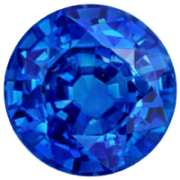
Sapphire
The most obsessed-over sapphire in the world is the 12-carat stunner on Princess Diana’s legendary engagement ring.
- Corundum
- Every color but red
- 9 Mohs
-
Libra Virgo
- Truth, Sincerity, Loyalty
- September

Swiss Blue Topaz
Wear a topaz and it could make you invisible in times of emergency. Farfetched? Well, that's what the Ancient Greeks believed!
- Silicate
- Yellow, Orange, Brown
- 8 Mohs
-
Scorpio Sagittarius
- Love, Loyalty
- November

Tanzanite
Though a new discovery, tanzanites could quickly become extinct! It's because they're mined in only one place on Earth.
- Zoisite
- Violet purple, Bluish violet
- 6 to 7 Mohs
-
Sagittarius Capricorn
- Abundance, New beginnings
- December

Tourmaline
Self-love is the best kind of love and tourmaline is considered to be the best gem to help you in this journey.
- Silicate
- All colors
- 7 to 7.5 Mohs
-
Libra Scorpio
- Friendship, Compassion
- October

Tsavorite
Tsavorites may look like emeralds, but in reality, they are roughly 200 times rarer than emeralds.
- Garnet group of minerals
- Green
- 6.5 to 7.5 Mohs
- Strength, Vitality, Positivity

Turquoise
Would you believe us if we told you that the gorgeous turquoise is one of the oldest gemstones in the world?
- Turquoise
- Blue, Greenish blue
- 5 to 6 Mohs
-
Sagittarius Capricorn
- Positivity, Happiness
- December

The 4C’s
There are several factors that determine the quality and the price of a ruby. The highest quality stones are decided by overview of 4C’s:
- Color
- Carat
- Clarity
- Cuts
01Color
- The color of a ruby is one of the most important distinguishing characteristics of its value.
- Slight differences in color can make a huge difference. The most coveted color is pure, vibrant red with a hint of blue.
- If the color is too light, the stone is considered a pink sapphire. As the shade moves towards orange or purple, the ruby moves down the quality scale.


02Carat
- The per-carat price of ruby can also increase drastically as its size increases.
- Fine-quality natural rubies over one carat are very rare, which makes them extremely valuable.
- Commercial-quality rubies are commonly available in a wide range of sizes.
03Clarity
- Rubies with absolutely no inclusions are nonexistent. The value of a ruby depends on how visible these inclusions are.
- Major inclusions and ones that reduce the transparency or brightness of the stone lower its value. Rubies typically include thin mineral inclusions called needles. These needles are called silk when present in intersecting groups.
- Ruby inclusions appear in the form of small crystals, patches of varied color or ones that resemble fingerprints.


04Cuts
- The ruby crystal’s shape decides its suitability for certain cuts. The most common shape a ruby comes in is a flat tabular hexagonal shape.
- Commonly, rubies are cut in oval and cushion shapes, with brilliant-cut crowns and step-cut pavilions. Round, triangular, emerald, pear and marquise rubies are also available, but are rare in larger sizes.
| Gem Quality | Color | Clarity | Brilliance | Rareness | Shop Products |
|---|---|---|---|---|---|
| Heirloom (AAAA) |  Deep Rich Red Deep Rich Red | Moderately to Very Slightly Included | Very High | Top 1% |
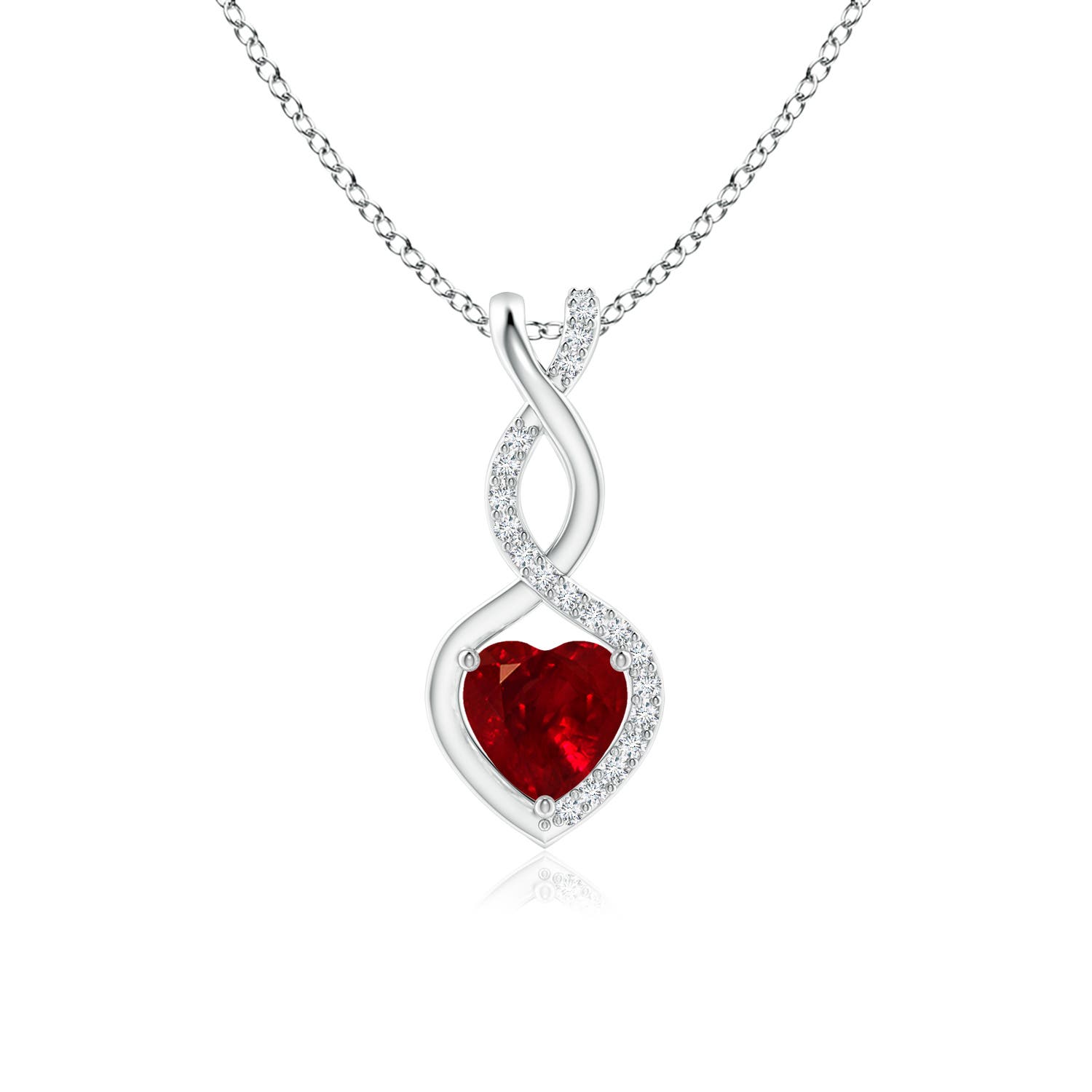
Ruby Infinity Heart Pendant with Diamonds$1539 |
| Best (AAA) |  Medium Red Medium Red | Moderately Included | High | Top 10% |
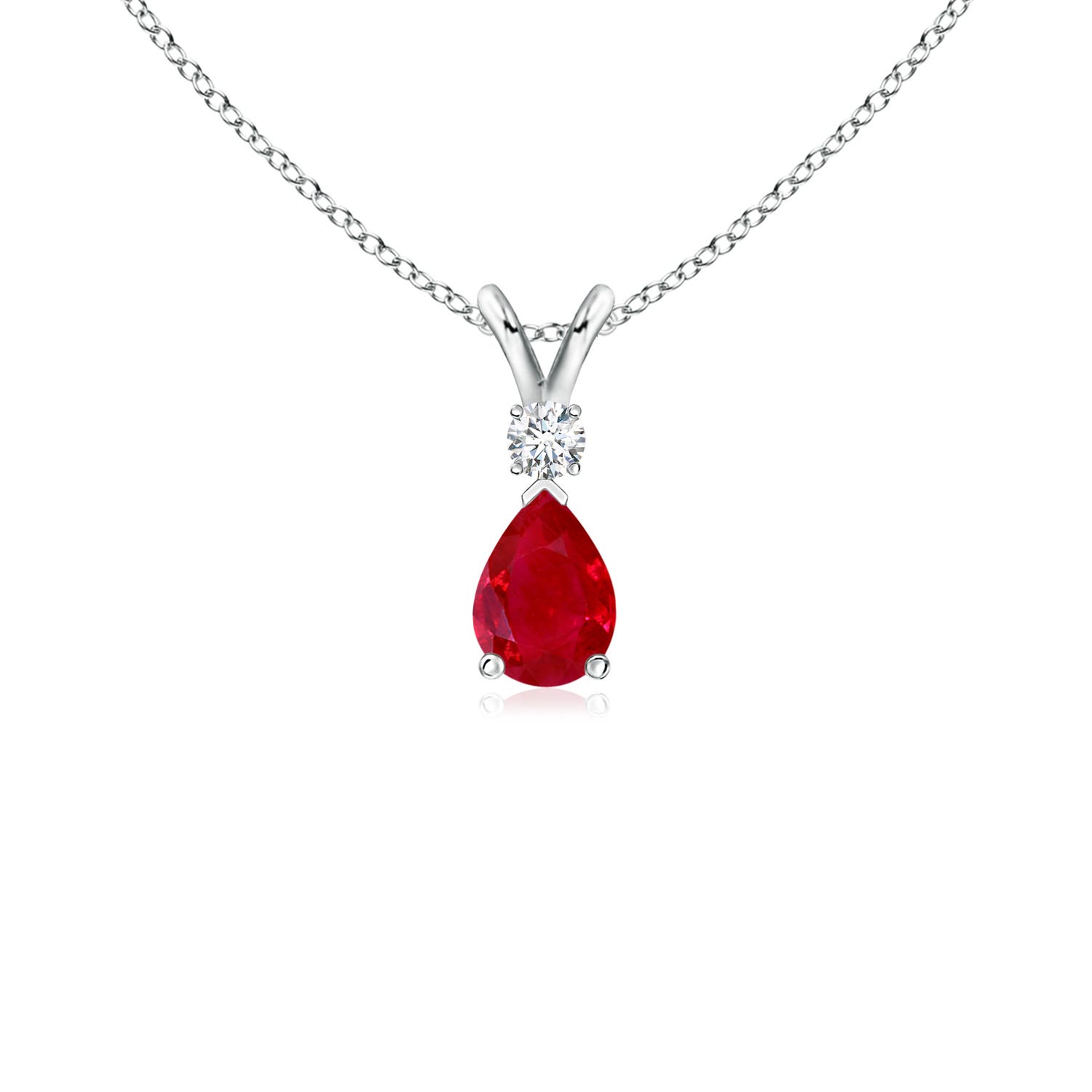
Ruby Teardrop Pendant with Diamond$759 |
| Better (AA) |  Medium Pinkish Red Medium Pinkish Red | Heavily Included | Medium | Top 33% |
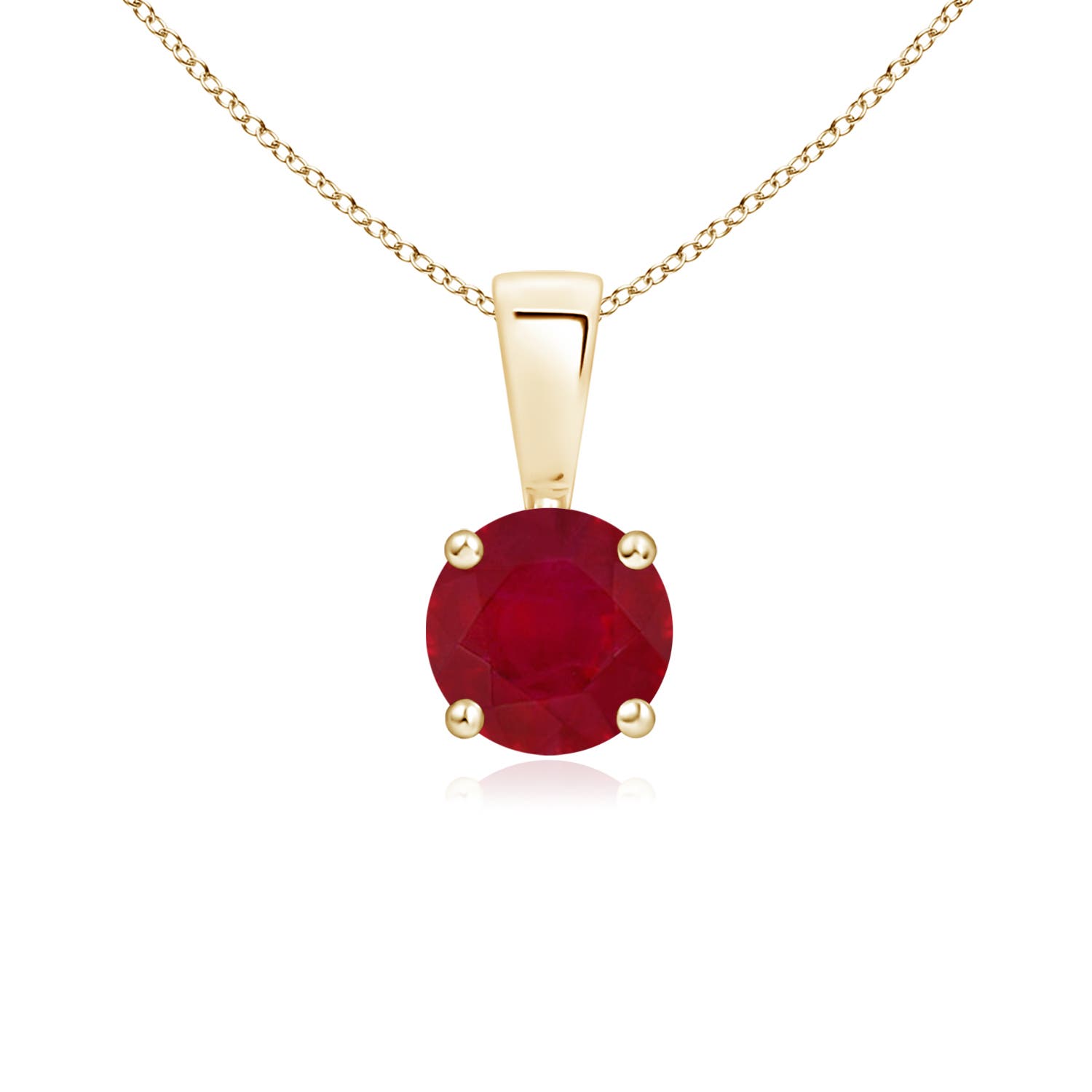
Classic Round Ruby Solitaire Pendant$739 |
| Good (A) |  Dark Red Dark Red | Opaque | Low | Top 75% |
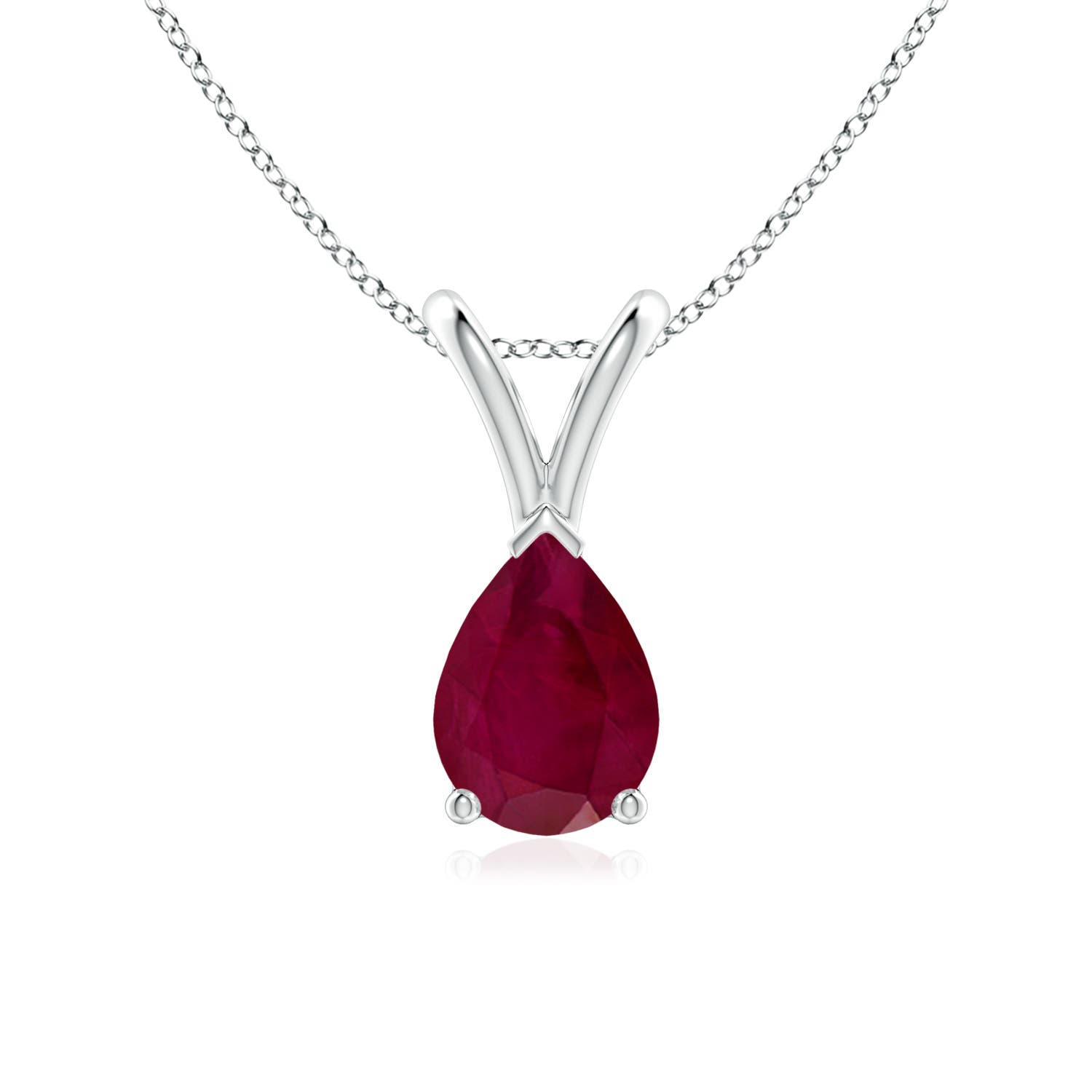
V-Bale Pear-Shaped Ruby Solitaire Pendant$429 |
Latest Pick from Ruby Jewelry
 Rings
Rings
 Earrings
 Bracelets
 Necklaces
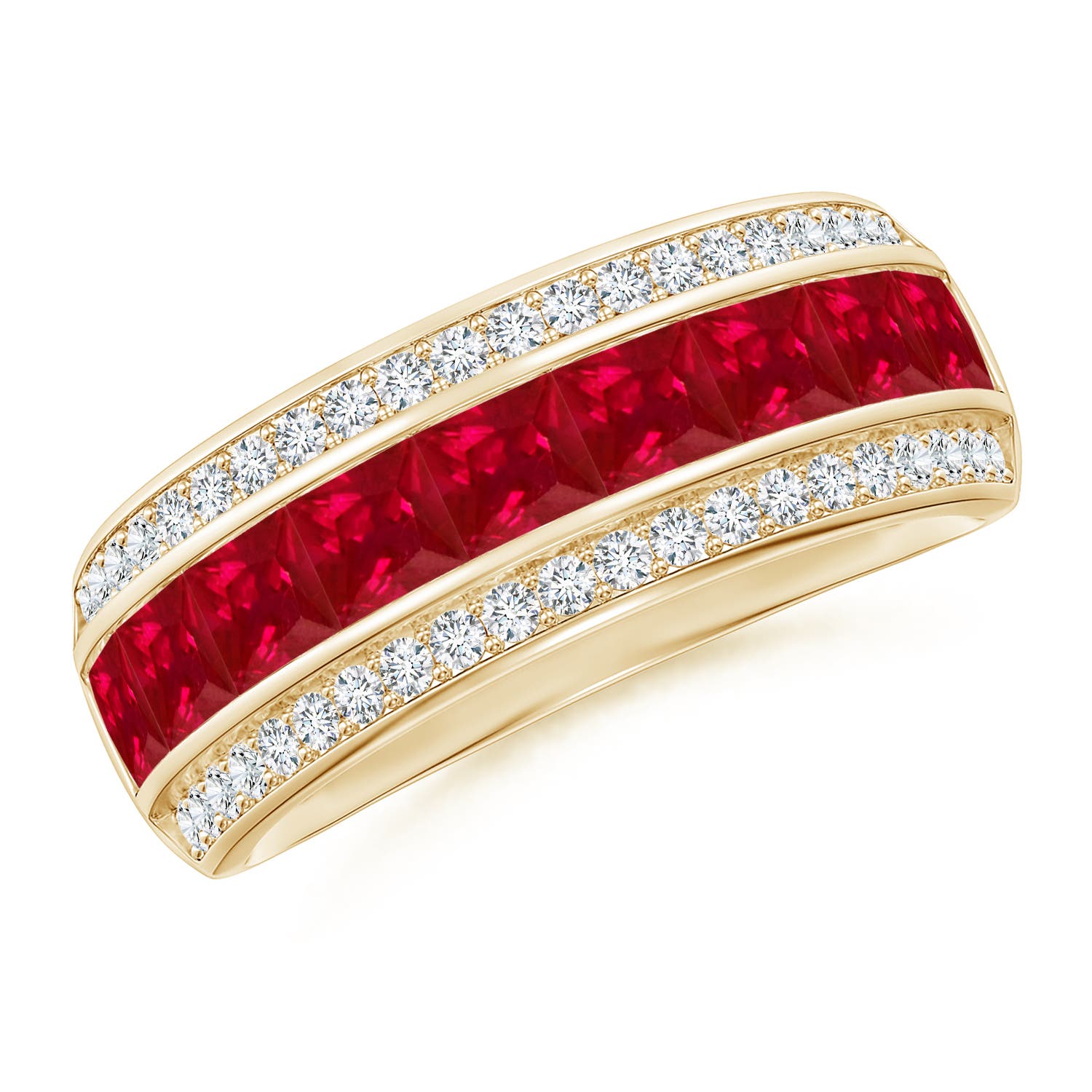
Channel-Set Square Ruby and Diamond Half Eternity Band
$2979
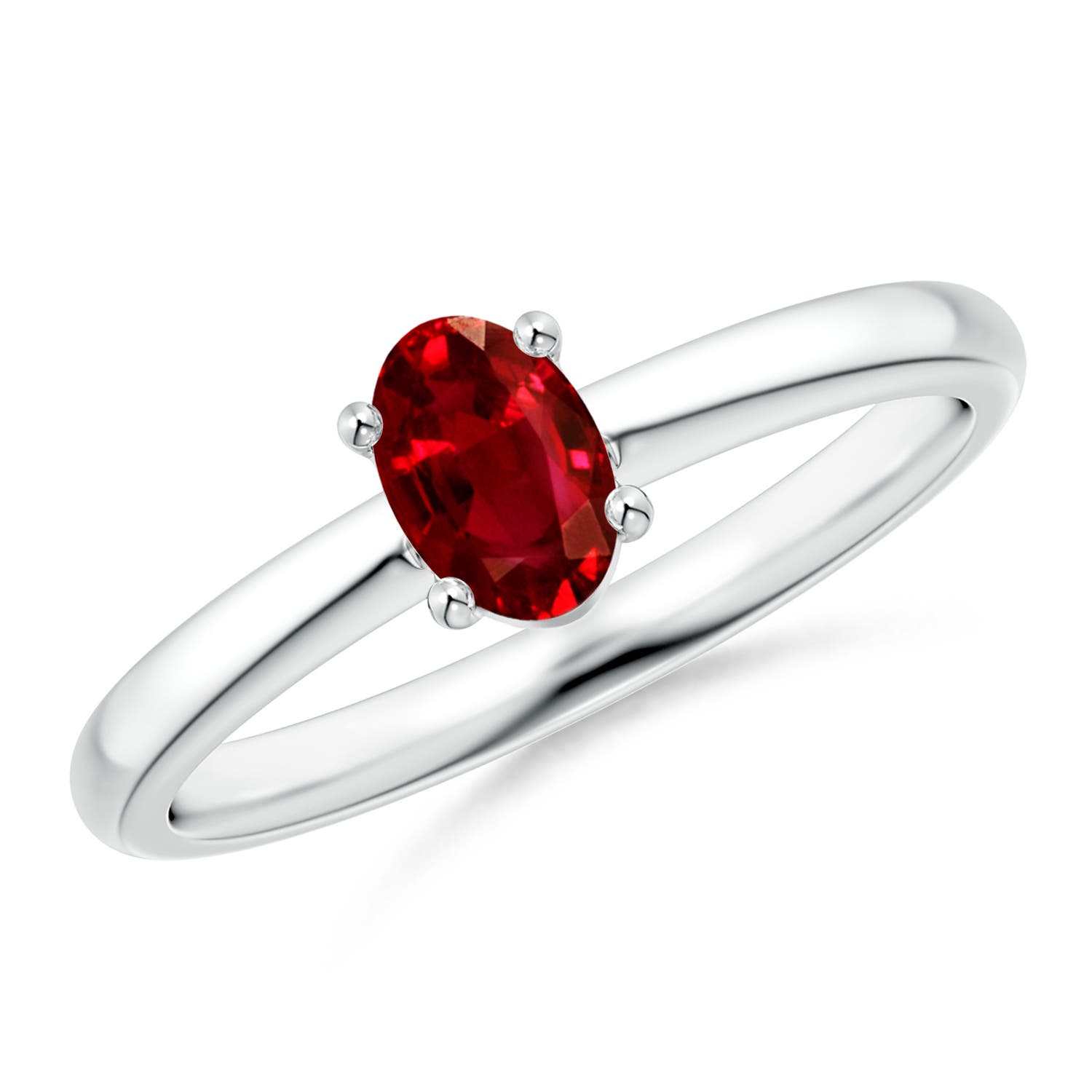
Classic Solitaire Oval Ruby Promise Ring
$1199
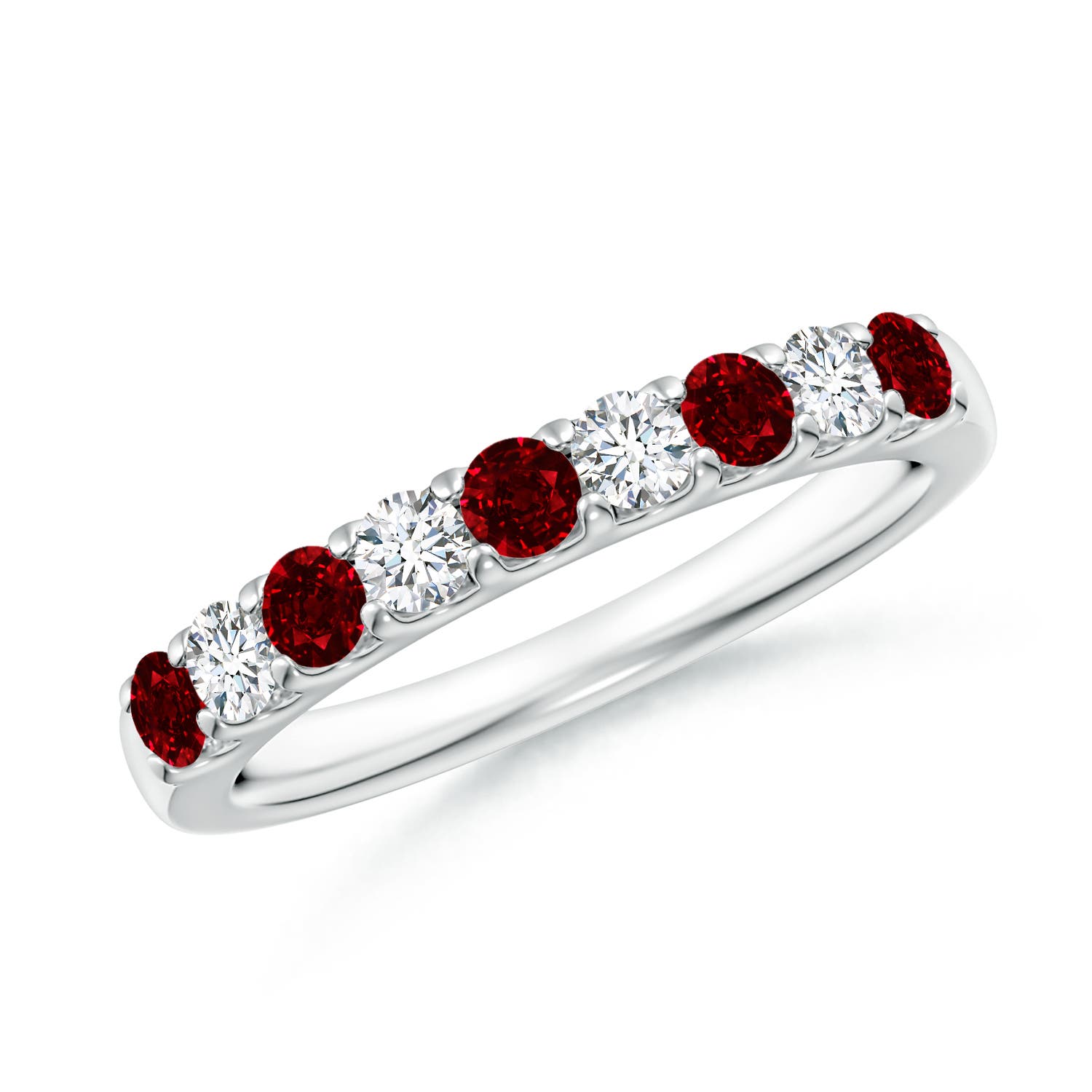
Shared Prong Ruby and Diamond Half Eternity Ring
$1369
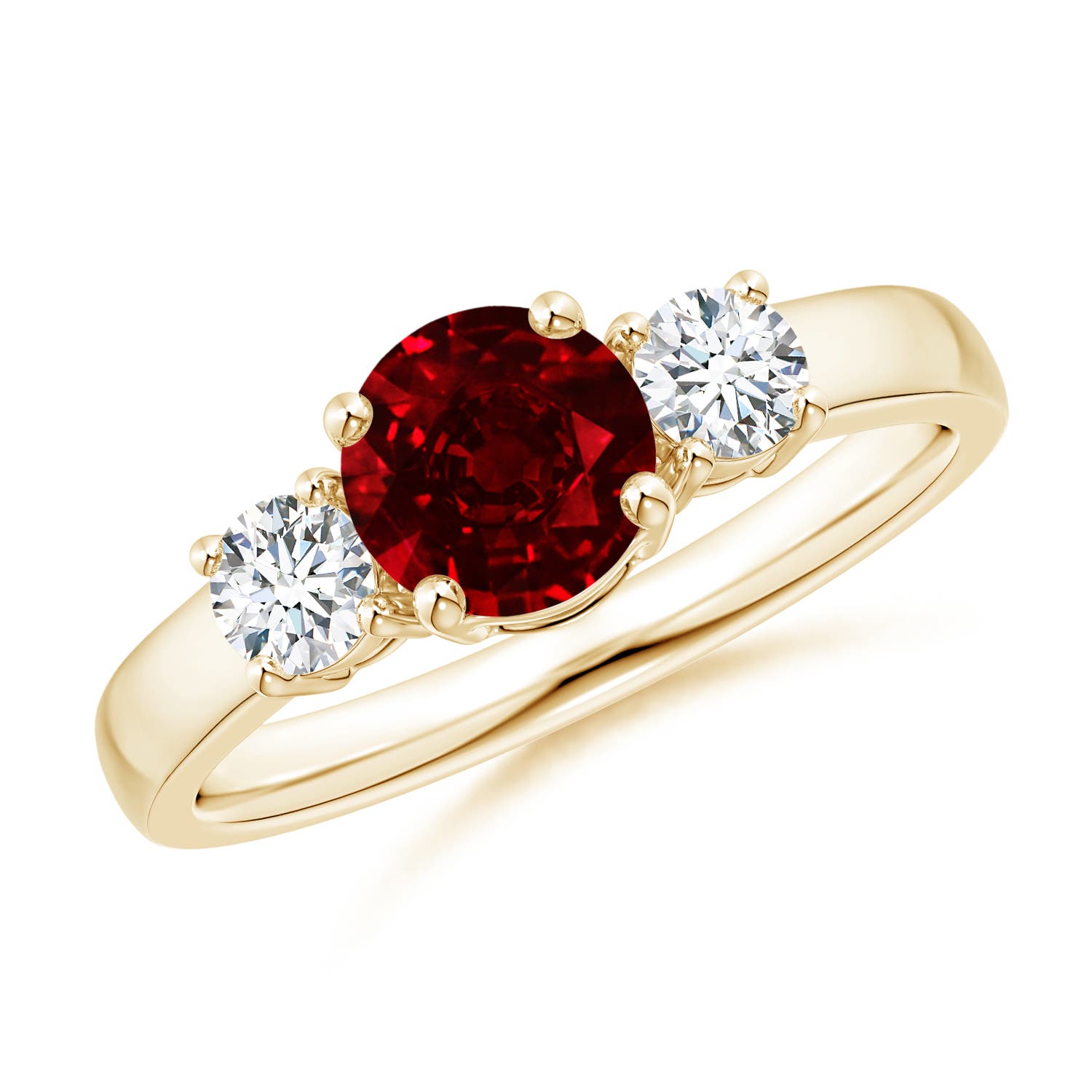
Classic Ruby and Diamond Three Stone Engagement Ring
$6709
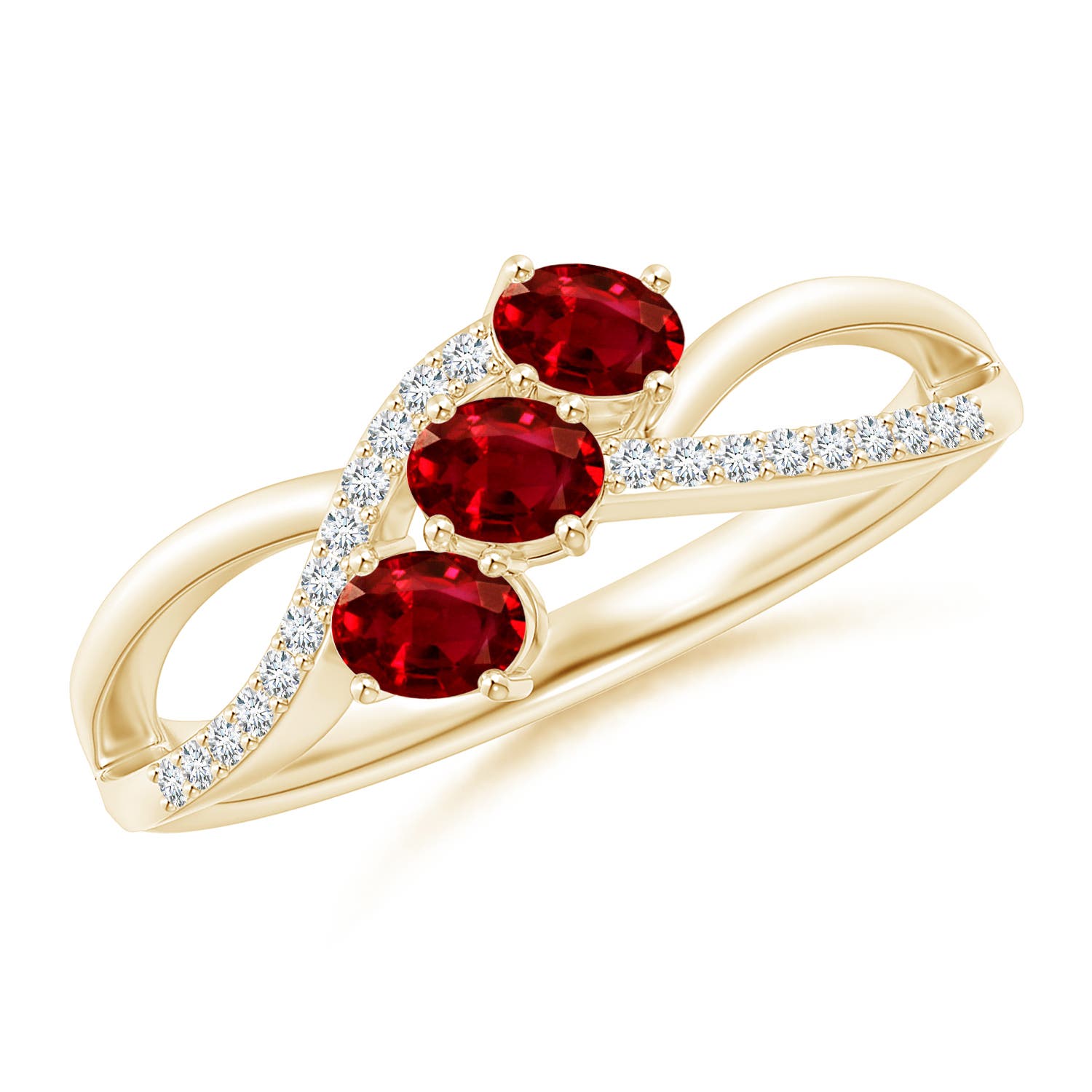
Oval Ruby Three Stone Bypass Ring with Diamonds
$1229
